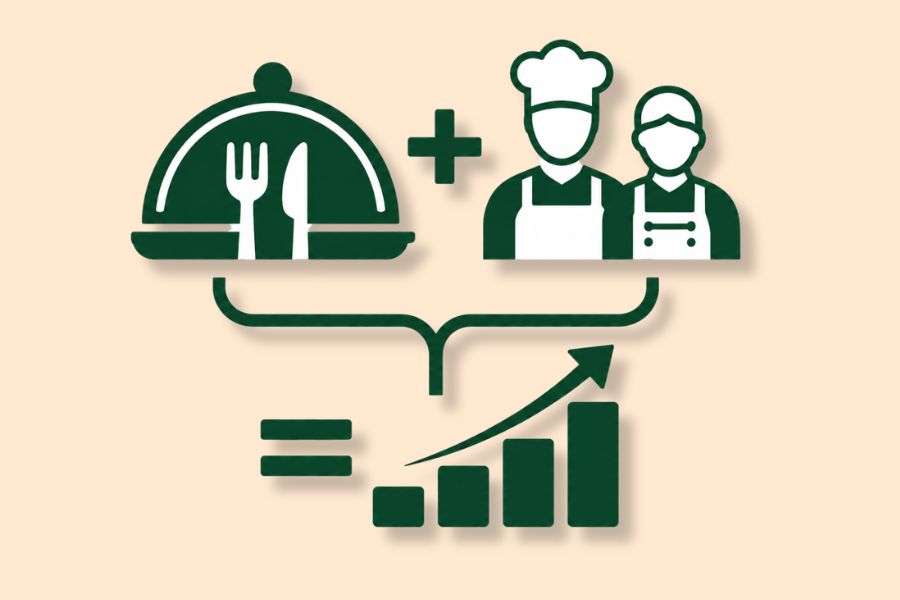

Actual and theoretical food cost are two essential metrics for restaurants and hospitality businesses that want to understand their ingredient expenses and operational efficiency. Although closely related, they measure different aspects of food consumption and often reveal important discrepancies.
A restaurant may have accurately costed recipes, consistent sales, and strong customer demand, yet its monthly food expenses may still exceed expectations.
Comparing actual and theoretical food cost helps management identify these differences, investigate their causes, and understand how daily operating practices affect profitability.
What Is Theoretical Food Cost?
Theoretical food cost represents what a restaurant should spend on ingredients based on standardized recipes, ingredient quantities, and recorded sales.
Calculating it requires accurate recipe costing, up-to-date ingredient prices, and reliable sales information.
For example, if a menu item costs €4 in ingredients and the restaurant sells 200 portions, the theoretical ingredient cost for those sales is €800.
This calculation assumes that each portion follows the standardized recipe without additional ingredient consumption.
Accurate recipe costing is therefore essential for producing reliable theoretical figures. It also supports stronger menu pricing decisions and helps management understand how ingredient costs affect profit margins.
What Is Actual Food Cost?
Actual food cost reflects the value of ingredients consumed during a specific accounting period.
It is calculated using opening inventory, net purchases, and closing inventory.
The basic formula is:
Actual Food Consumption = Opening Inventory + Net Purchases – Closing Inventory
To calculate actual food cost as a percentage, divide ingredient consumption by the corresponding net food revenue and multiply by 100.
The calculation should also account for relevant inventory adjustments, including supplier returns and transfers between departments.
Reliable inventory records are particularly important because inaccurate stock counts can significantly distort the results.
Restaurants operating multiple kitchens, outlets, or food service departments should also maintain consistent inventory and transfer procedures to ensure the figures remain comparable.
Understanding the Difference Between Actual and Theoretical Food Cost
Consider a restaurant generating €30,000 in net monthly food sales.
Based on standardized recipes and the products sold, the theoretical ingredient cost is €9,000, representing 30% of revenue.
However, inventory records and purchasing data indicate actual ingredient consumption of €10,500, representing 35%.
The difference is €1,500, or five percentage points.
If this variance continues every month under similar operating conditions, the annual cost difference could reach €18,000.
The variance does not automatically reveal where the additional consumption occurred. It does, however, indicate that operational processes require closer examination.
For hospitality operators managing several outlets, regular comparisons can also help identify which departments are performing consistently and which require further investigation.
What Causes Food Cost Variances?
Inconsistent Portion Sizes
When kitchen employees use more ingredients than specified in standardized recipes, actual ingredient consumption increases without a corresponding increase in selling price.
Food Waste and Spoilage
Excessive preparation, expired products, incorrect storage, and unnecessary production can create losses that are not included in theoretical recipe calculations.
Supplier Price Changes
Ingredient prices can change frequently. When recipes are not updated to reflect current purchasing costs, theoretical food cost becomes less accurate.
Inventory Inaccuracies
Incorrect stock counts, missing delivery records, and inconsistent inventory valuation methods can distort actual food consumption calculations.
Complimentary Meals and Staff Consumption
Complimentary dishes and staff meals increase ingredient usage. If these activities are not recorded separately, management may struggle to explain the difference between expected and actual consumption.
How Can Restaurants Reduce Food Cost Variances?
Reducing variances requires consistent processes and regular performance monitoring.
Restaurants should maintain standardized recipes, control portion sizes, update ingredient costs, and conduct reliable inventory counts.
Food waste, complimentary meals, staff consumption, and transfers between departments should also be recorded consistently.
Comparing actual and theoretical food cost by product category can provide more useful information than examining only the overall monthly percentage.
It allows management to identify whether discrepancies are related to particular ingredients, preparation methods, inventory procedures, or purchasing activities.
Clear operational responsibilities are equally important. When staff understand how ingredients should be received, stored, prepared, and recorded, the business can maintain more reliable cost information.
Why Regular Food Cost Monitoring Matters
A single monthly food cost percentage rarely provides enough information to explain operational performance.
A restaurant may achieve its sales targets while losing margin through inconsistent production, inventory shortages, or uncontrolled consumption.
Regular comparisons create a clearer picture of ingredient movement and make it easier to identify recurring problems.
These findings can also become part of structured restaurant reporting, allowing management to connect food cost performance with sales, payroll, and other operating expenses.
For larger hospitality businesses, this information is particularly useful when evaluating multiple outlets and monitoring departmental performance.
Turning Food Cost Data into Better Decisions
Understanding the variance is only the first step. Management must then determine which operational actions can reduce unnecessary consumption.
These actions may include updating recipes, adjusting preparation standards, improving stock control, or reviewing supplier agreements.
A structured approach helps businesses evaluate whether corrective measures are producing measurable improvements.
HORECA Plus works with hospitality and food service businesses to strengthen financial visibility, operational procedures, and management decisions. Its approach to these challenges can also be seen in its restaurant and hospitality project scenarios.
Conclusion
Actual and theoretical food cost provide complementary insights into restaurant efficiency and profitability.
Their differences can reveal weaknesses in purchasing, inventory management, recipe execution, and production processes.
By monitoring these indicators consistently, restaurant operators can improve financial visibility and make better-informed decisions about daily operations.
HORECA Plus supports restaurants and hospitality businesses through practical cost control, financial analysis, and operational consulting, helping management teams establish more reliable systems and improve performance.
To discuss your restaurant’s food cost performance and identify opportunities for improvement, get in touch with HORECA Plusω and request an introductory discussion.